
Pain and TENs Machine
Did you know that our human bodies create electricity and run on electricity? Yes, that’s true. Electrical-type wires are running throughout our bodies, which we refer to as nerves. …
Sam B.
23rd Jul 26
3 min read
Did you know that our human bodies create electricity and run on electricity? Yes, that’s true. Electrical-type wires are running throughout our bodies, which we refer to as nerves. Together, these nerves make up something we call the nervous system. The nervous system consists of two parts: part one, the central nervous system (CNS), and part two, the peripheral nervous system [1].
The CNS consists of the brain and the spinal cord. The peripheral nervous system is all other nerves, i.e. the nerves that run from the spinal cord to every other part of our bodies. The CNS is thought of as the motherboard, or control centre, of our bodies; the Peripheral nervous system is dependent on the CNS [1]. One exception to this is what we see in the gut. The nervous system keeps us alive by controlling our brain function, breathing, heartbeat, and is critical to our ability to walk, talk and move. One of the things our nervous system allows us to do is to feel the world around us and also our bodies. In this article, the feeling we are focusing on is pain.
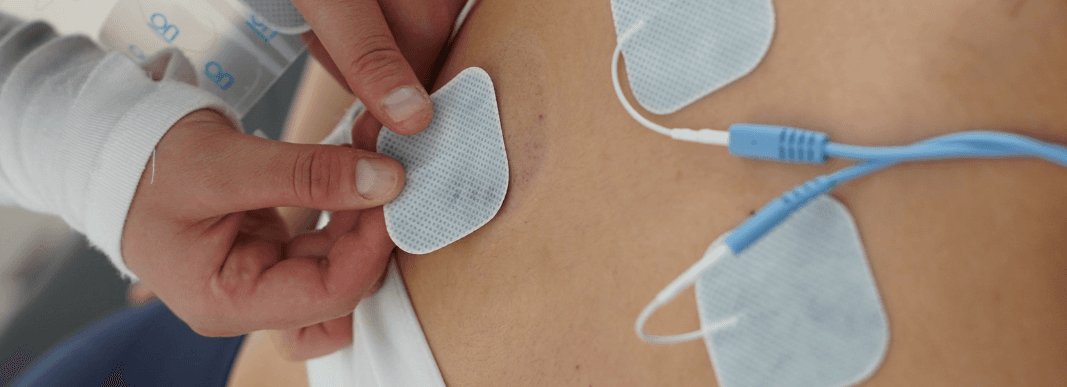
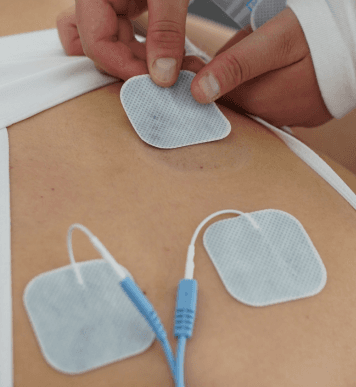
TENS (transcutaneous electrical nerve stimulation) therapy involves the use of a small, battery-powered unit to interact with our nerves to offer pain relief. Electrodes are thoughtfully placed on a particular part of the body to interact with specific nerves. As an invention, it sounds radical, or extreme, and some might argue it is; however, it’s not new. The idea has been around since 60 AD, and we see historical use of electrical eels to achieve pain relief [2].
TENS is used to treat the following types of pain:
- • period pain
- • labour pain
- • joint pain
- • neck and back pain
- • endometriosis
- • sports injuries (associated pain)
- • Multiple sclerosis (associated pain)
- • spinal cord injury (associated pain)
- • Postoperative pain
- • Acute non-postoperative pain
- • Low back pain
- • Arthritis pain
- • Diabetic peripheral neuropathy
- • Fibromyalgia
- • Neuropathic pain, e.g., spinal cord injury [3][2]
Scientific evidence has demonstrated that the mechanism through which TENS relieves pain occurs both through the peripheral nervous system and the central nervous system. TENs does not necessarily need to be applied directly to the particular leg in pain. TENS can allievate pain by being applied to the opposite leg. The opposite leg, which was not the original site of the pain, sends electrical signals back to the CNS to trigger for a pain relief response to the leg which was initially in pain [4].
TENS stimulates nerves in a manner that mimics how they are triggered in a pain situation, thereby triggering a natural pain relief response [3]. Although TENs is not a drug, evidence shows that the natural pain relief response here stimulates similar chemical reactions to some pain relief drugs [1].
TENS therapy stimulates opioid (from opiate) receptors in the brain. Different opioid receptors are stimulated depending on the voltage used [1]. Other feel-good chemicals stimulated include serotonin, muscarinic and endorphins [4] [3]. Similar to what is seen in drugs, where over time the same amount of drug dosage produces less of an effect, a phenomenon known as “tolerance”, it is possible to develop a tolerance to TENs therapy [4].
To achieve the best effectiveness from TENs therapy, it is essential to use it correctly. The electrical pulses provided by TENs can be adjusted for electrode placement voltage (how powerful they are), frequency (how often they are), duration (how long each pulse lasts) and pattern [4]. Additionally, TENs can be administered concurrently with certain physiotherapy exercises. A special schedule for TENs sessions may be established, independent of your daily activities, but tailored to the effectiveness of the treatment and your unique body.
Paraesthesia refers to abnormal sensations caused by stimulation of nerves. These sensations could feel like “pricking, tingling, burning or creeping on the skin”. Paraesthesia is often a symptom in disease and infection cases where there are issues in the nervous system [5]. Paraesthesia and muscle spasms are possible side effects of TENs treatment [3]. Pulses which occur occasionally, but are powerful, could cause muscles to contract, i.e. spasms or movement. Pulses which occur often, but are not powerful, could cause Paraesthesia [2].
Due to the potentially powerful nature of TENS, some people should not use TENS or should use it only under the supervision of their doctors. Note that our hearts, brain and muscles use electrical signals; So TENs can interfere with these. That is natural systems which allow us to breathe, keep our hearts beating, our brains thinking, and our bodies moving. People with Pacemakers, Epilepsy or those who are Pregnant are at risk from TENs [2].
Additionally, because the electrical systems in our bodies are necessary for basic functions that keep us alive and well, there are potential side effects and the complicated way in which the treatment works and is delivered. It’s important to consider that if you want to use TENs, you should seek professional guidance in doing so.
REFERENCES:
[1] Thau L, Reddy V, Singh P. Anatomy, Central Nervous System. [Updated 2022 Oct 10]. In: StatPearls [Internet]. Treasure Island (FL): StatPearls Publishing; 2025 Jan-. Available from: https://www.ncbi.nlm.nih.gov/books/NBK542179/
[2] Teoli D, Dua A, An J. Transcutaneous Electrical Nerve Stimulation. [Updated 2024 Mar 20]. In: StatPearls [Internet]. Treasure Island (FL): StatPearls Publishing; 2025 Jan-. Available from: https://www.ncbi.nlm.nih.gov/books/NBK537188/
[3] https://www.medicalnewstoday.com/articles/323632#benefits (accessed 30th Jan 2025)
[4] J.M. DeSantana, D.M. Walsh, C.Vance, B. A. Rakel, K. A. Sluka, ‘Effectiveness of Transcutaneous Electrical Nerve Stimulation for Treatment of Hyperalgesia and Pain’, Curr Rheumatol Rep, vol. 10, no. 6, 2008.
[5] https://www.merriam-webster.com/dictionary/paresthesia (accessed 14th Feb 2025)
About the Author:
Sam B. holds a BSc in Biomedical Sciences and writes evidence-based reviews of scientific literature. The articles summarise and critically evaluate published research for educational and informational purposes. They are intended to improve public understanding of scientific evidence and should not be considered a substitute for professional medical, psychological or therapeutic advice.